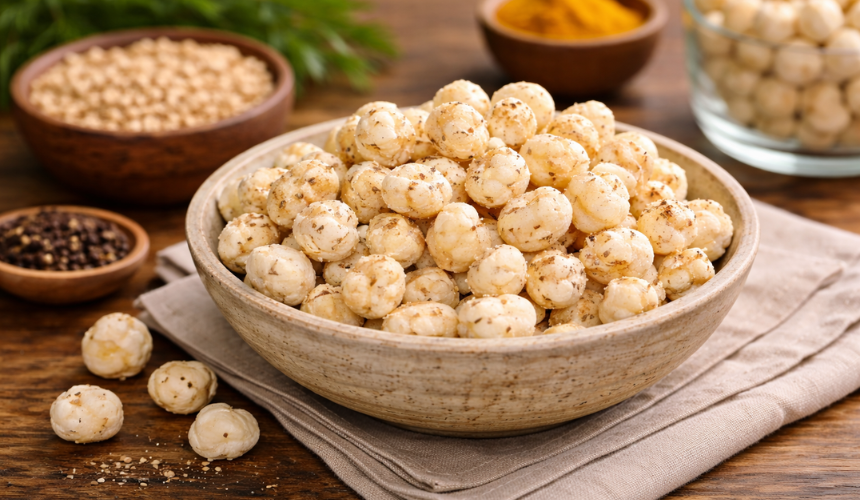

Makhana, also known as fox nuts or lotus seeds, has steadily transformed from a traditional Indian food into a globally recognized superfood. As consumers become more conscious about what they eat, the demand for natural, minimally processed, and nutrient-rich foods is increasing—and makhana fits perfectly into this shift.
What was once a regional staple is now being adopted by international snack brands, retailers, and private label companies looking for healthier alternatives.
The Shift Toward Smarter Snacking
Across global markets, consumer preferences are evolving. There is a clear movement away from heavily processed snacks toward products that are simple, clean, and nutritionally balanced.
Makhana stands out in this space because it offers a rare combination of light texture and nutritional value. It provides a satisfying crunch without the heaviness associated with traditional fried snacks.
This shift has made makhana particularly appealing to:
- Health-conscious consumers
- Plant-based diet followers
- Clean-label product buyers
- Modern snack brands
Nutritional Value That Supports Modern Diets
One of the strongest reasons behind makhana’s global rise is its nutritional profile. It naturally aligns with several dietary trends shaping the food industry today.
- Being low in calories and fat
- Providing plant-based protein
- Being gluten-free and easy to digest
These qualities make makhana a great choice for consumers seeking healthier snack options without compromising on taste or convenience.
From Traditional Ingredient to Modern Food Category
Makhana has been consumed in India for centuries, but its role has expanded significantly in recent years. It is no longer limited to traditional use—it has become a flexible ingredient for modern food applications.
Today, makhana is commonly used in:
- Roasted ready-to-eat snacks
- Flavoured snack variations
- Health mixes and granola
- Functional and wellness products
Its neutral taste allows it to absorb a wide range of flavours, making it highly adaptable for product innovation.
Rising Demand in Global Markets
International demand for makhana is growing steadily, especially in regions like the UK and Europe where consumers are actively seeking healthier food options.
For importers and distributors, makhana presents a strong opportunity to introduce a product that aligns with modern consumer expectations while offering long-term growth potential.
This demand is encouraging businesses to look for suppliers who can ensure:
- Consistent product quality
- Reliable bulk supply
- Export-ready processing standards
Why Quality Matters in Makhana Supply
As makhana enters global markets, quality becomes a key differentiator. Buyers expect uniform grading, clean processing, and consistency across batches.
Even small variations in size, texture, or roasting can impact the final product experience. This is why sourcing from experienced suppliers is essential.
A structured approach to processing and quality control ensures that makhana meets international standards.
A Superfood with Long-Term Potential
Conclusion
Makhana’s journey from traditional food to global superfood reflects the changing priorities of modern consumers. Its natural origin, nutritional benefits, and versatility make it a strong choice for both consumers and businesses.
As global demand continues to rise, makhana is set to play an important role in the future of healthy snacking.
Partner with Vitika Foods to source premium makhana and build a reliable supply foundation for your business.
Hola Kala
January 28, 2024when an unknown printer took a galley of type and scrambled it to make a type specimen bookhas a not only five centuries, but also the leap into electronic typesetting, remaining essentially unchan galley of type and scrambled it to make a type specimen book.