
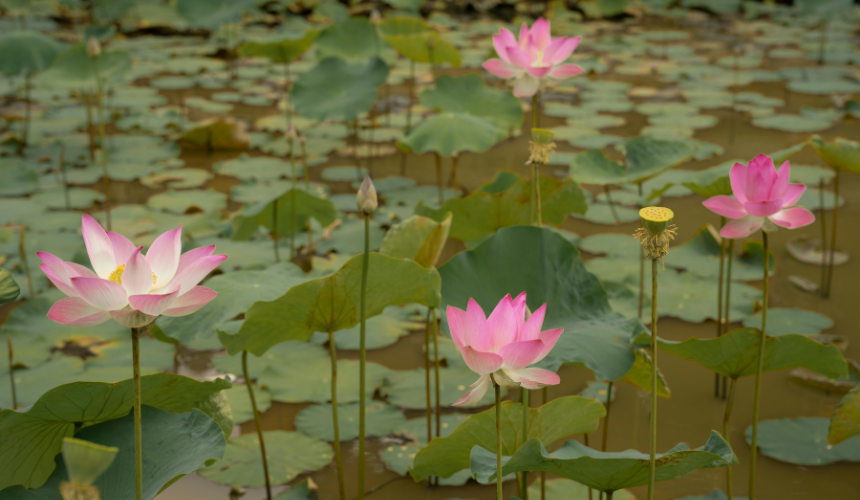

Makhana harvesting is one of the most unique agricultural processes in the world. Unlike conventional crops grown on land, makhana is cultivated in natural freshwater ponds, making its sourcing both distinctive and labor-intensive.
This traditional method of cultivation and harvesting plays a crucial role in defining the quality, texture, and authenticity of the final product. For global buyers, understanding this journey provides deeper insight into what makes makhana a valuable and trusted ingredient.
The Natural Ecosystem of Makhana Cultivation
Makhana grows in still water bodies such as ponds and wetlands, where lotus plants thrive under specific environmental conditions. These regions provide the ideal balance of water depth, temperature, and soil composition required for healthy seed development.
Farmers rely on seasonal cycles and natural conditions rather than controlled farming environments. This makes makhana cultivation closely connected to nature, unlike many industrial crops.
Because of this, sourcing high-quality makhana requires strong relationships with cultivation regions and experienced farmers.
The Harvesting Process
Harvesting makhana is a manual process that requires both skill and patience. Farmers collect seeds from the bottom of ponds, often working in challenging conditions.
The process typically follows a structured sequence:
- Seeds are collected from pond beds during harvesting season
- Collected seeds are cleaned to remove impurities
- Seeds are sun-dried to reduce moisture content
- Dried seeds are stored before further processing
This stage is critical because the quality of raw seeds directly impacts the final product.
Traditional Processing After Harvest
Once harvested, makhana undergoes a series of traditional processing steps that give it its characteristic light and crunchy texture.
The process includes careful heating, roasting, and manual popping. These steps are performed using techniques that have been refined over generations.
Unlike fully automated processes, traditional roasting plays an important role in maintaining the natural quality of makhana. It ensures that the product retains its structure without becoming overly processed.
The Role of Skill and Experience
Makhana processing is not just mechanical—it requires human expertise. Skilled workers are involved in grading, roasting, and sorting, ensuring that only high-quality seeds are selected.
Even slight variations in temperature or handling can affect the final output. This is why experienced processing teams are essential in delivering consistent quality.
For buyers, this translates into:
- Better product consistency
- Controlled processing standards
- Reduced variability between batches
Challenges in Makhana Sourcing
Despite its growing global demand, makhana sourcing comes with several challenges that highlight the importance of reliable suppliers.
Some key challenges include:
- Dependence on natural water conditions
- Seasonal harvesting cycles
- Labor-intensive collection methods
These factors make makhana a specialized product that requires careful planning and supply management.
Importance of Direct and Structured Sourcing
For international buyers, sourcing makhana directly from cultivation regions offers several advantages. It ensures authenticity while also improving supply reliability.
Working with structured sourcing systems allows businesses to maintain:
- Traceability of product origin
- Better control over quality
- Consistent availability for bulk orders
This is particularly important for distributors and brands that rely on steady supply chains.
From Pond to Processing Facility
After harvesting, makhana seeds are transported to processing units where they undergo grading, roasting, and packaging. Maintaining hygiene and consistency during this stage is essential for export readiness.
Processing facilities that combine traditional expertise with modern quality practices are better equipped to meet international standards.
This ensures that the final product delivered to global markets meets expectations in terms of quality, safety, and consistency.
Why Sourcing Matters for Global Buyers
For businesses importing makhana, sourcing is not just about procurement—it directly affects product performance in the market.
Understanding how makhana is harvested and processed helps buyers evaluate:
- Product authenticity
- Quality consistency
- Supplier reliability
A well-managed sourcing process ensures that businesses can confidently offer makhana to their customers.
Conclusion
Makhana harvesting is deeply rooted in traditional practices and natural ecosystems. This unique process is what gives makhana its distinct quality and global appeal.
As demand continues to grow, sourcing from experienced and reliable suppliers becomes increasingly important for maintaining consistency and meeting market expectations.
Connect with Vitika Foods to source premium makhana directly from trusted cultivation and processing networks.
supperadmin
December 11, 2023Finanappreciate your trust greatly Our clients choose dentace ducts because kn ow we are the best area Awaitingare really.